Wrapped Fabric Panels vs. Site-Fabricated Fabric Systems: Why the Installation Method Matters
When specifying acoustic or decorative fabric wall systems, architects, designers and builders often face a key decision: pre-manufactured fabric wrapped panels or site-fabricated stretched-fabric systems such as those used in Fabricmate-style installations.
At a glance, both systems may appear similar—fabric covering an acoustic surface to improve aesthetics and sound absorption. However, the method of construction and installation creates substantial differences in durability, flexibility, appearance, and long-term value.
Many people use the terms wrapped panels and stretched fabric systems interchangeably, but in practice they represent two very different technologies.
Understanding Pre-Wrapped Fabric Panels
Pre-wrapped fabric panels are manufactured in a shop environment before being shipped to the job site. A rigid acoustic core—often fiberglass board—is wrapped with fabric, and the material is secured using adhesive on the face and edges.
The edges of the panel are typically resin treated or reinforced to provide modest durability during installation and use.
While these panels can be effective for basic acoustic treatment, their design introduces numerous limitations that become apparent over time.
Limitations of Pre-Wrapped Panels
Adhesive-Dependent Construction
The fabric covering on pre-wrapped panels is permanently glued to the substrate. Over time adhesives can degrade due to temperature changes, humidity, or aging. This can lead to:
Fabric loosening or wrinkling
Edge separation
Reduced lifespan of the panel
Sizes limited to 4'x8'
Because the fabric is permanently attached, repairing or updating the panel becomes difficult. The whole panels need to be replaced.
Visible Wear and Surface Damage
With fabric pulled tightly across the face of the panel and glued directly to the core, the material sits directly against the substrate. This can make the surface more susceptible to:
Pressure marks
Impact damage
Visible wear patterns over time
Even modest contact can create noticeable surface imperfections.
Panel Edge Vulnerability
Although panel edges are treated for durability, they remain susceptible to crushing or damage, especially in high-traffic areas.
This is particularly problematic in spaces such as:
Schools
Offices
Conference rooms
Hospitality environments
Once edges are damaged, the face is soiled or torn, the entire panel often needs replacement.
Limited Repair Options
If fabric becomes stained, torn, or outdated, the typical solution is replacing the entire panel. Matching fabrics later can also be challenging due to dye lot differences.
For large installations, this can become both costly and disruptive.
What Makes Site-Fabricated Fabric Systems Different
Site-fabricated stretched-fabric systems take a completely different approach. Instead of shipping finished panels, the system uses perimeter tracks installed directly on the wall.
Acoustic infill is placed inside the track system, and fabric is stretched across the surface and mechanically tensioned into the track.
One of the defining features of systems like the Fabricmate® approach is the use of a high-impact plastic frame system that surrounds the panel area and protects the edges of the installation from impacts.
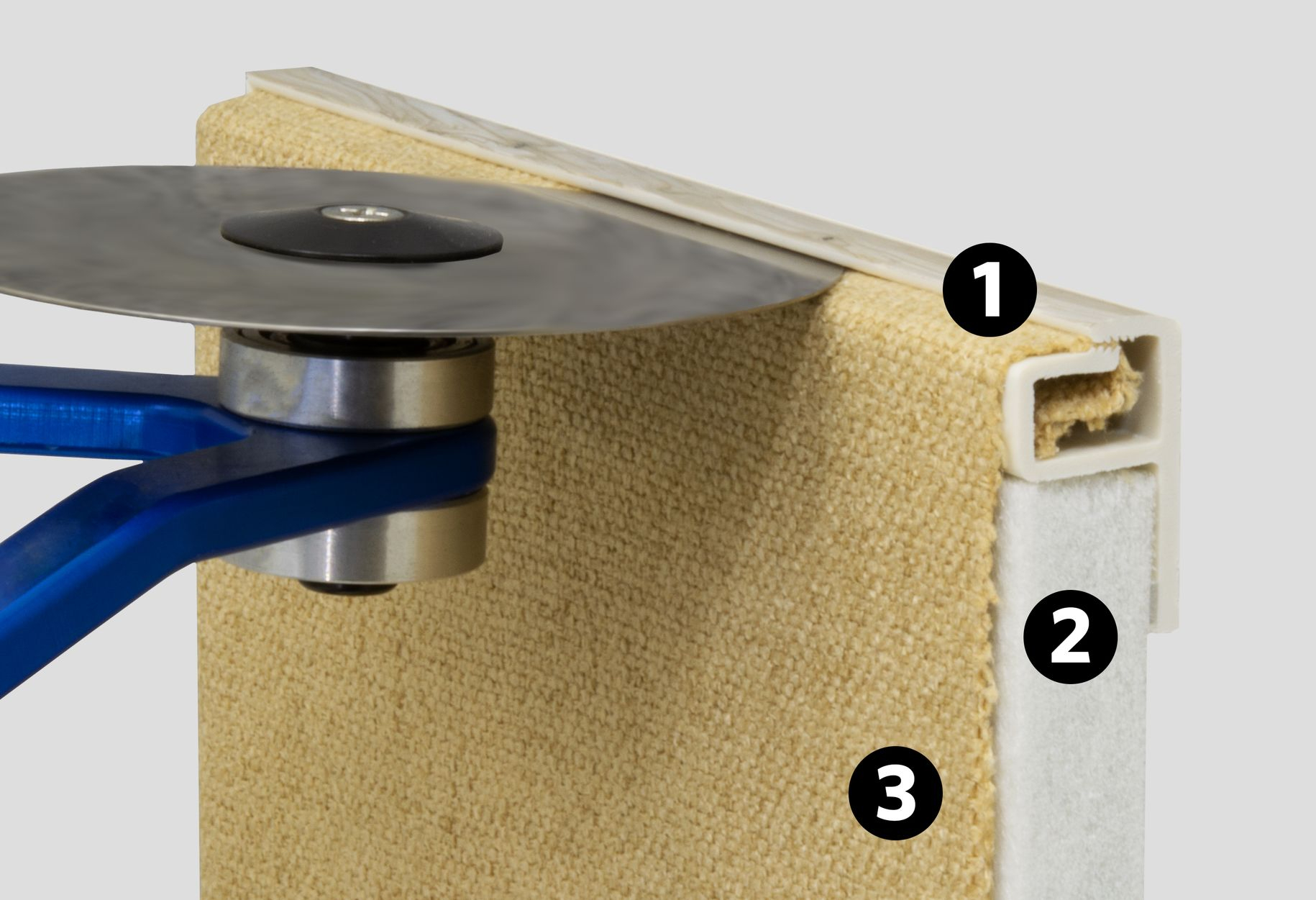
1. Frame
The Frame outlines the shape of the panel or wall, holding the fabric in place and protecting the edges with a high-impact polymer frame. Frames are used as Intermediate Joints for instances when installation width is greater than width of the fabric. Learn More
2. Backing
Backing is placed within the frame covering the wall. Fabricmate offers a variety of backings that absorb reverberated sound, provide wall protection, thermal insulation, and make a pinnable bulletin-board like surface. Learn More
3. Fabric
Fabric is stretched taut over the backing rolled into the frame. This allows the panel surface to spring back when struck, effectively mitigating visible damage. When its time to refresh your look easily remove and replace the fabric.
Learn More
The Advantages of a Site-Fabricated Fabric System
1. High-Impact Frame Protection
Unlike traditional wrapped panels, stretched-fabric systems incorporate a track frame that surrounds and protects the panel edges from damage.
The frame is typically made from high-impact plastic that renders the edges virtually crush-proof. This dramatically improves durability in areas where panels might otherwise be damaged by carts, furniture, or everyday traffic.
2. A Self-Scribing Frame That Adapts On-Site
One of the most significant advantages of site-fabricated systems is their ability to adapt to real-world construction conditions.
Track systems are self-scribing, meaning they can easily adjust to:
Uneven walls
Out-of-square corners
Architectural irregularities
Unique wall geometries
Instead of forcing the architecture to fit predetermined panel sizes, the system conforms to the building itself. Saving time and money.
3. Fabric That Floats Above the Panel Surface
In stretched-fabric systems, the fabric covering is inserted into tight-fitting track jaws that hold the material taut.
This creates a unique advantage: the fabric floats slightly above the acoustic substrate rather than being glued directly to it.
This floating surface helps:
Reduce visible pressure marks
Minimize surface damage
Maintain a smoother appearance over time
In contrast, pre-wrapped panels often show surface wear because the fabric is permanently bonded to the underlying board.
4. Replaceable Fabric for Long-Term Flexibility
Another major advantage is fabric accessibility.
If the fabric becomes damaged, soiled, or simply needs updating, it can be removed and replaced without removing the entire wall system.
This provides significant benefits:
Lower maintenance costs
Faster repairs
Easy design updates
Extended system lifespan
In environments where aesthetics evolve—such as education or corporate spaces, hospitality venues, or public spaces—this flexibility is extremely valuable.
5. Seamless Architectural Integration
Because the fabric is installed on site, the system allows for continuous wall surfaces without visible panel seams.
Designers can create:
Large uninterrupted feature walls, panels can be the length of the entire wall with no breaks
Integrated acoustic treatments
Custom shapes and transitions
Smooth integration around doors, windows, and lighting
This creates a more refined architectural finish than pre-made panel-based systems.
A Clear Difference in Performance
When comparing the two systems side by side, the differences become clear.
| Feature | Pre-Wrapped Panels | Site-Fabricated Fabric Systems |
|---|---|---|
| Fabric Attachment | Permanently glued to substrate | Mechanically tensioned track system |
| Edge Protection | Edge treated panels | High-impact frame system |
| Surface Contact | Fabric bonded to core | Fabric floats above surface |
| Adaptability | Fixed panel sizes | Self-scribing, site-adjustable |
| Repair | Replace entire panel | Replace fabric only |
| Design Flexibility | Limited layouts | Continuous seamless surfaces |
The Clear Choice
While pre-wrapped panels may serve basic acoustic needs, site-fabricated stretched-fabric systems provide superior durability, adaptability, and long-term value.
By eliminating adhesive-dependent construction, protecting panel edges with a durable frame system, and allowing fabric to float above the acoustic surface, these systems offer a level of performance that traditional wrapped panels simply cannot match.
For architects, designers, and facility managers looking for aesthetic quality, resilience, and long-term flexibility, the advantages of a site-fabricated system make it the clear choice.